
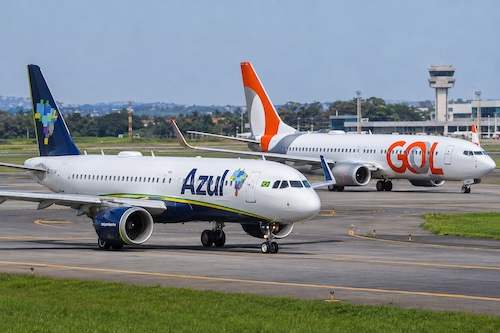
Competition in Brazil’s domestic aviation market is intensifying as Azul Brazilian Airlines moves closer to overtaking GOL Linhas Aéreas, potentially reclaiming its position as the country’s second-largest airline before the end of 2026.
According to October 2026 data from Brazil’s National Civil Aviation Agency (ANAC), Azul recorded a 5.6% year-over-year increase in passenger traffic measured in Revenue Passenger Kilometers (RPK), while GOL experienced a 5.4% decline.
The contrasting performances have narrowed the market share gap between the two airlines to just 1.1 percentage points.
Brazilian Domestic Aviation Market Share – October 2026
- LATAM Airlines Brasil: 41.2%
- GOL Linhas Aéreas: 29.9%
- Azul Brazilian Airlines: 28.8%
LATAM remains the clear market leader, with passenger traffic growing by 1.2% compared to October 2025.
Azul’s Extensive Regional Network
Azul already operates more flights than GOL, thanks largely to its extensive regional network connecting smaller cities and underserved destinations throughout Brazil.
However, Azul operates a diverse fleet that includes smaller regional aircraft, while GOL relies primarily on larger Boeing 737 aircraft. Consequently, a higher number of flights does not necessarily translate into a greater market share.
GOL’s Network Reduction Creates Opportunities for Azul
GOL’s recent route reductions, combined with Azul’s growing passenger demand, could accelerate changes in the competitive landscape of Brazilian aviation.
If current trends continue, Azul could surpass GOL before the end of 2026, returning to a position it last held during the aviation industry’s recovery from the COVID-19 pandemic.
For travelers, stronger competition between Brazil’s major airlines could encourage more competitive fares, improved connectivity and additional domestic travel options.
The coming months will be decisive in determining whether Azul can reclaim second place and reshape Brazil’s domestic aviation market heading into 2027.