
Rising international arrivals, new hotel investments, improved air connectivity, and a stronger regional economy are transforming Northeast Brazil into an increasingly important market for both inbound and outbound tourism.
Northeast Brazil is gaining prominence in the international travel industry, attracting more foreign visitors while also generating growing demand for overseas travel among its residents.
According to a survey highlighted by Brazil Travel Market (BTM), the region is experiencing positive developments across several tourism sectors, including international air connectivity, hotel infrastructure, and consumer demand.
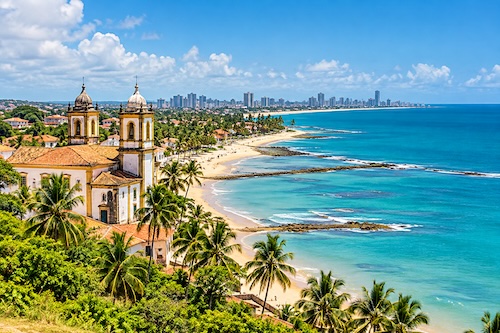
Traditionally known for its spectacular beaches, tropical climate, and rich cultural heritage, Northeast Brazil is increasingly positioning itself as a major gateway for international tourism.
International Tourism Gains Momentum
Destinations such as Recife, Fortaleza, Salvador, Natal, and Maceió are benefiting from growing international interest in Brazil’s northeastern coastline.
The region offers several advantages for international travelers, including year-round warm weather, relatively affordable accommodations, distinctive regional cuisine, and a diverse selection of beach and cultural destinations.
European travelers, particularly those from Portugal, Spain, France, and Italy, represent an important potential market, supported by geographic proximity and existing aviation connections.
The region is also attracting interest from travelers seeking alternatives to Brazil’s more established international destinations, such as Rio de Janeiro and São Paulo.
Airlines Expand International Connectivity
Improved air connectivity is one of the key factors supporting Northeast Brazil’s tourism development.
Airports in Recife, Fortaleza, and Salvador play important roles in connecting the region with international markets, while airlines continue evaluating opportunities to expand their networks.
Brazilian carriers Azul, GOL, and LATAM, together with international airlines, are central to the region’s aviation development.
Recife, in particular, benefits from Azul’s extensive domestic network, allowing international passengers to connect to numerous destinations throughout Northeast Brazil.
Fortaleza and Salvador also serve as important international gateways, with opportunities to strengthen connections with Europe and other South American markets.
Additional nonstop international flights could make Northeast Brazil more competitive by reducing travel times and eliminating the need for passengers to connect through São Paulo or Rio de Janeiro.
Hotel Investment Reflects Growing Confidence
The hospitality industry is responding to the region’s tourism potential with investments in new hotels, resorts, and upgraded accommodations.
Beach destinations throughout Bahia, Pernambuco, Ceará, Rio Grande do Norte, and Alagoas are attracting attention from hospitality developers seeking to serve both Brazilian and international visitors.
The expansion of hotel infrastructure is particularly important for destinations hoping to attract higher-spending international travelers and extend tourism beyond traditional holiday periods.
Investment in hospitality can also generate employment, strengthen local businesses, and encourage improvements in transportation and tourism services.
Northeast Brazil Is Also Becoming an Important Outbound Market
One of the most significant findings highlighted by Brazil Travel Market is the region’s growing importance as a source of international travelers.
Historically, much of Brazil’s outbound international tourism has been concentrated in wealthier metropolitan areas such as São Paulo, Rio de Janeiro, and Brasília.
However, improving economic conditions and expanding consumer purchasing power in Northeast Brazil are creating opportunities for airlines, travel agencies, and international destinations.
Residents of cities such as Recife, Fortaleza, and Salvador are increasingly relevant to the market for international vacations, particularly to destinations in Europe, South America, and the United States.
This development could encourage airlines to introduce additional international services directly from northeastern airports rather than routing passengers through Brazil’s southeastern hubs.
Opportunities for Brazil’s Aviation Industry
The simultaneous growth of inbound and outbound travel creates an attractive opportunity for airlines.
International routes become more commercially sustainable when carriers can generate passenger demand in both directions.
For example, flights connecting Northeast Brazil with European cities can serve European vacationers traveling to Brazil while also transporting Brazilian residents traveling abroad for leisure, business, or family visits.
This two-way demand could support higher flight frequencies, improved year-round connectivity, and potentially new international routes.
Domestic connectivity remains equally important. Travelers arriving at major northeastern gateways often continue to smaller coastal destinations, creating opportunities for regional aviation and connecting services.
What This Means for Brazil’s Tourism Future
The findings presented by Brazil Travel Market suggest that Northeast Brazil is evolving beyond its traditional role as a domestic beach vacation destination.
The combination of stronger international demand, hospitality investment, improved aviation access, and rising outbound travel creates opportunities for sustained tourism development.
Challenges remain, including airport connectivity, infrastructure, seasonal demand, and the need to maintain competitive international airfares.
Nevertheless, the region’s growing importance could reshape Brazil’s international aviation landscape, gradually reducing the concentration of international travel through São Paulo and Rio de Janeiro.
For airlines, tourism operators, and international travelers, Northeast Brazil is becoming a market increasingly difficult to overlook.