
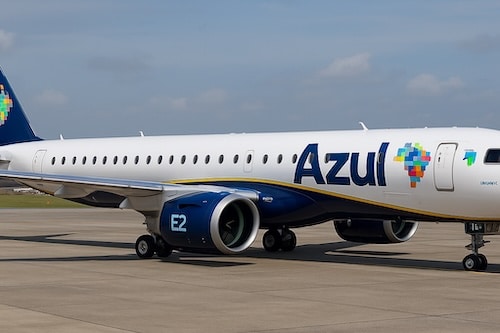
Brazil’s airline industry just witnessed a pivotal moment. Azul has officially exited Chapter 11 bankruptcy proceedings in the United States, marking the end of a turbulent restructuring period and the beginning of what could be a leaner, more focused chapter for one of Brazil’s largest carriers.
For travelers, investors, and competitors alike, this development reshapes the competitive map of Brazilian aviation.
What Chapter 11 Meant for Azul
Chapter 11 is a legal process in the United States that allows companies to reorganize their debts while continuing operations. For Azul, it provided breathing room to renegotiate obligations, restructure its balance sheet, and recalibrate operations after years of financial strain caused by pandemic fallout, currency volatility, high fuel costs, and mounting debt.
Unlike liquidation, Chapter 11 is designed to preserve business continuity. Azul continued flying throughout the restructuring process, maintaining its domestic network and international routes while negotiating with creditors and stakeholders.
Now, with court approval secured and the process concluded, Azul emerges with a significantly improved financial structure.
A Stronger Balance Sheet
As part of its reorganization, Azul reduced its debt burden and secured new financial backing. The airline streamlined liabilities and strengthened liquidity, creating a foundation aimed at long term sustainability.
This reset provides critical advantages:
-
Lower financial pressure from debt repayments
-
Improved access to capital markets
-
Greater flexibility for fleet and network planning
-
Enhanced competitiveness in Brazil’s crowded domestic market
The restructuring also reshaped ownership, as creditors and investors converted portions of debt into equity. Such transformations are common in Chapter 11 proceedings and can redefine shareholder composition.
Impact on Brazil’s Airline Industry
Azul’s exit from Chapter 11 comes at a sensitive time for Brazil’s aviation sector. The country’s three major carriers, Azul, LATAM Brasil, and GOL, have each faced financial stress in recent years.
Azul has historically distinguished itself with a unique network strategy, serving underserved regional cities across Brazil and operating a diverse fleet that includes Embraer E-Jets, ATR turboprops, and Airbus narrowbody aircraft. Its strong presence in secondary markets has been a key competitive differentiator.
With its restructuring complete, Azul may now be positioned to:
-
Defend and potentially expand its regional dominance
-
Optimize fleet utilization
-
Strengthen partnerships and codeshares
-
Pursue disciplined growth in international markets
For competitors, a financially healthier Azul means renewed competitive pressure, particularly on key domestic routes.
What This Means for Passengers
For travelers, Azul’s emergence from Chapter 11 is reassuring. The airline continues to operate normally, and its restructuring was designed to ensure operational continuity.
Passengers can expect:
-
Continued service across Azul’s extensive domestic network
-
Stability in flight operations
-
Ongoing investment in fleet efficiency and onboard experience
In practical terms, flights were not interrupted by the bankruptcy process, and loyalty programs and ticket sales continued as usual.
A Turning Point for Azul
Exiting Chapter 11 is not merely an administrative milestone. It represents a strategic reset. Airlines operate in one of the most capital intensive and volatile industries in the world, where fuel prices, exchange rates, and demand cycles can shift quickly.
Azul’s successful restructuring signals resilience. The airline has shed part of its financial weight and now has an opportunity to rebuild momentum in a recovering Brazilian travel market.
Whether Azul accelerates expansion or prioritizes conservative consolidation remains to be seen. What is clear is that the carrier has moved from survival mode to strategic repositioning.
Brazil’s aviation skies are clearing, and Azul is once again flying on its own financial wings.