
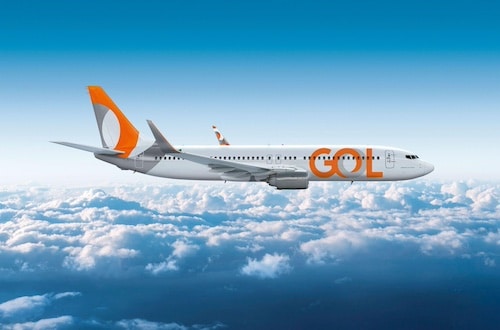
GOL Linhas Aéreas has inaugurated its first nonstop service between Rio de Janeiro and Lisbon, marking the airline’s official entry into the European market and opening a promising new chapter for tourism between Brazil and Portugal.
The new route connects Rio de Janeiro–Galeão International Airport with Lisbon four times per week. Beginning November 24, GOL plans to add a fifth weekly frequency, reflecting encouraging early demand for the service.
The flights are initially being operated with an Airbus A330-200 supplied and crewed by Spanish carrier Wamos Air. GOL is expected to introduce its own Airbus A330-900neo on the route in February 2027. The new aircraft will accommodate 298 passengers, including 34 in the airline’s Insignia business-class cabin and 264 in economy.
A Milestone in GOL’s International Expansion
Although GOL has long served destinations across South America, the Caribbean and the United States, Lisbon represents the airline’s first nonstop connection between Brazil and Europe.
The route also strengthens Galeão’s position as GOL’s principal long-haul hub. Passengers arriving from Portugal will be able to connect through Rio to numerous destinations across Brazil using GOL’s extensive domestic network.
This connectivity could be particularly valuable for Portuguese travelers interested in visiting destinations beyond the traditional Rio–São Paulo corridor, including Salvador, Recife, Fortaleza, Brasília, the Pantanal and the Amazon.
Lisbon also provides GOL with a natural entry point into Europe. Portugal and Brazil share a language, strong cultural connections and extensive family and business ties, making the market less challenging to develop than many other European destinations.
Portuguese Tourism to Brazil Is Already Growing
The new service arrives during a period of remarkable growth in Portuguese travel to Brazil.
Brazil received approximately 273,000 Portuguese visitors in 2025, the highest total since 2007 and an increase of about 25% compared with the previous year. The upward trend has continued in 2026: nearly 178,000 Portuguese tourists visited Brazil between January and July, representing another increase of approximately 25% year over year.
These figures make Portugal one of Brazil’s most important European tourism markets.
The additional capacity provided by GOL could accelerate that growth. More competition normally gives travelers a wider choice of schedules and fares, while GOL’s domestic network makes it easier to combine Rio with other Brazilian destinations on a single itinerary.
GOL has indicated that early bookings for the Lisbon route have exceeded expectations, with advance sales reportedly representing more than 80% of the available seats on some flights. The airline has also said that it sees the potential to eventually operate as many as two daily flights, depending on demand, aircraft availability and airport slots.
Rio Could Benefit Beyond the Airport
For Rio de Janeiro, the route has value beyond simply adding another international flight.
A nonstop GOL service gives Portuguese visitors more direct access to the city while also creating opportunities for multi-destination vacations. A traveler could, for example, spend several days in Rio before continuing to Iguaçu Falls, Salvador or the Brazilian Northeast.
Portuguese visitors are particularly attractive to Brazil because they tend to have a strong interest in Brazilian culture, gastronomy, history and nature. The absence of a language barrier also makes independent travel easier, encouraging visitors to explore more destinations and stay longer.
The route may also stimulate travel outside Brazil’s traditional summer season. Cultural events, Carnival, nature tourism and family visits can generate demand throughout the year.
More Competition Across the Atlantic
Portugal–Brazil is already one of the most established air markets linking Europe and South America, particularly through TAP Air Portugal’s extensive Brazilian network. GOL’s arrival introduces a Brazilian competitor on the important Rio–Lisbon corridor.
Competition could benefit passengers through more fare options, additional frequent-flyer opportunities and improved connections within Brazil. GOL’s Smiles program may also help attract customers who already earn miles through the airline or its international partners.
For GOL, Lisbon will serve as an important test of its ability to compete in the long-haul market. If the route performs well, it could support additional European expansion and reinforce Galeão’s return as a major international gateway.
The inaugural flight is therefore more than a new line on GOL’s route map. It connects two naturally complementary tourism markets at a time when Portuguese interest in Brazil is already rising rapidly—and could help turn that momentum into sustained growth.