
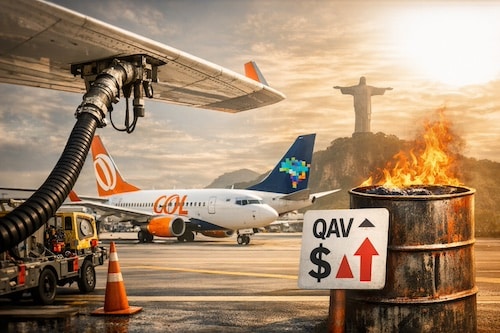
Airlines Face Turbulence as Fuel Costs Climb
Brazil’s airline industry may be heading into a challenging period as the price of aviation fuel continues to rise sharply. Known as QAV (querosene de aviação), jet fuel is one of the largest cost components for airlines, often representing 30% or more of total operating expenses.
With global oil prices under pressure and currency fluctuations adding extra strain, Brazilian carriers are now warning of a severe financial impact if the trend continues.
For airlines already operating on tight margins, this is not just a headwind, it’s a potential storm system building on the horizon.
Why Jet Fuel Matters So Much
Unlike many other industries, airlines have limited flexibility when it comes to fuel consumption. Planes burn what they burn, and efficiency gains take years of fleet upgrades.
Brazil faces an additional structural challenge:
- Fuel prices are heavily influenced by the exchange rate (USD vs BRL)
- Distribution and taxation can make fuel in Brazil more expensive than in other markets
This creates a situation where Brazilian airlines may be paying significantly more for fuel than competitors abroad, squeezing profitability even further.
Potential Impact on Airfares and Routes
When fuel prices spike, airlines typically have three levers:
1. Higher Airfares
Expect upward pressure on ticket prices, especially on domestic routes where competition is intense but margins are thin.
2. Capacity Adjustments
Airlines may reduce frequencies or cut less profitable routes, particularly to secondary destinations.
3. Operational Efficiency
Carriers will push for better aircraft utilization, optimize routes, and prioritize newer, more fuel-efficient planes.
Brazil’s major airlines — including LATAM Airlines, GOL Linhas Aéreas, and Azul Linhas Aéreas — could all feel the impact, though each has different fleet strategies and financial resilience.
What This Means for Travelers to Brazil
For international travelers planning trips to Brazil, the ripple effects could be noticeable:
- Higher domestic flight costs within Brazil
- Fewer route options in some regions
- Increased importance of planning itineraries efficiently
This is particularly relevant for travelers visiting multiple destinations across a vast country like Brazil, where flying is often the only practical option.
A Strategic Opportunity for Smarter Travel Planning
In times of rising airfares, structured flight solutions become more valuable.
Products like the Brazil Airpass allow travelers to lock in a series of domestic flights at a predictable cost, helping reduce exposure to price volatility. Instead of booking separate tickets at fluctuating rates, travelers can plan a multi-city itinerary with more pricing certainty.
For example, a traveler combining destinations like Rio de Janeiro, Salvador, and Foz do Iguaçu may benefit from bundling flights rather than purchasing them individually as prices rise.
Outlook: A Market to Watch Closely
The trajectory of jet fuel prices will be a key variable for Brazil’s aviation sector in the coming months. If costs remain elevated:
- Airlines may face margin compression
- Travelers could see sustained fare increases
- Competition dynamics may shift across key routes
At the same time, demand for travel to Brazil remains strong, especially with growing international interest in leisure destinations and cultural tourism.
The result? A delicate balancing act between cost pressures and demand resilience — one that will shape the next phase of Brazil’s airline industry.