
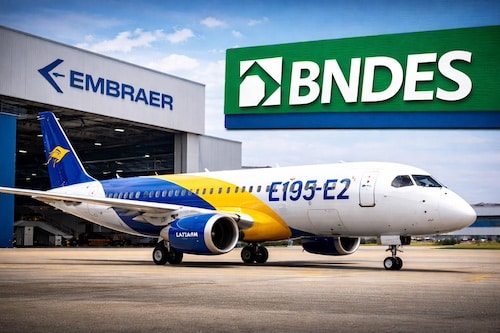
Brazil’s airline industry is set to receive a significant financial boost in 2026, as the country’s leading carriers gain access to R$4 billion in financing through Brazil’s national development bank, BNDES. The initiative aims to strengthen airline balance sheets, support fleet expansion, and encourage sustainable aviation practices across the country.
The funding marks an important step in reinforcing Brazil’s aviation sector after years of financial pressure driven by high fuel costs, currency volatility, and post-pandemic recovery challenges.
Funding Structure and Objectives
The financing program is backed by Brazil’s civil aviation development resources and is designed to offer airlines access to long-term credit under competitive conditions. The loans are expected to begin disbursement in early 2026, allowing carriers to move forward with strategic investments quickly.
Key objectives of the program include:
-
Fleet renewal and expansion
-
Improved regional air connectivity
-
Incentives for sustainable aviation fuel adoption
-
Support for Brazil’s domestic aerospace industry
New Aircraft and Fleet Expansion Plans
One of the primary uses of the funding will be the acquisition of new aircraft, particularly jets manufactured by Embraer, reinforcing Brazil’s aviation supply chain.
-
LATAM Airlines is expected to introduce up to 24 Embraer E195-E2 aircraft, strengthening its domestic and regional network.
-
GOL Linhas Aéreas is also evaluating new Embraer aircraft as part of its medium-term fleet strategy.
-
Azul Linhas Aéreas, already the largest Embraer operator in the world, may use the funds to expand or modernize its regional fleet.
These aircraft are known for lower fuel consumption, reduced emissions, and operational flexibility, making them well-suited for Brazil’s diverse domestic market.
Competitive Interest Rates and Financial Stability
The financing lines are expected to offer annual interest rates between 6.5% and 7.5%, providing airlines with access to capital under conditions significantly more favorable than commercial market alternatives. This structure allows carriers to invest in growth while maintaining financial discipline.
During the grace period of the loans, airlines will be restricted from distributing profits to shareholders, ensuring that capital is directed toward operational improvements and network expansion.
Sustainability and Regional Connectivity Requirements
Beyond financial support, the program includes clear policy goals tied to sustainability and national development:
-
Increased use of Sustainable Aviation Fuel (SAF) produced in Brazil
-
Expansion of air service to underserved regions, including the Brazilian Northeast and the Amazon region
-
Measurable reductions in carbon emissions beyond minimum regulatory requirements
These measures align aviation growth with Brazil’s broader environmental and regional integration objectives.
What This Means for Travelers
For passengers, the impact could be significant. Expanded fleets and improved financial stability may lead to:
-
More domestic and regional routes
-
Increased flight frequencies
-
New connections between secondary cities
-
More efficient and modern aircraft
As airlines regain the ability to invest, travelers may benefit from improved connectivity and service quality across Brazil.
Outlook for Brazil’s Aviation Sector
The R$4 billion financing initiative represents one of the most important public-sector commitments to Brazilian aviation in recent years. By combining economic support, sustainability incentives, and regional development goals, the program positions Brazil’s airlines for a more resilient and competitive future starting in 2026.
As carriers finalize their investment plans, further announcements on aircraft orders, new routes, and sustainability initiatives are expected in the coming months.